When the Expert Becomes the Obstacle: Rethinking How Sake Gets Introduced to New Drinkers
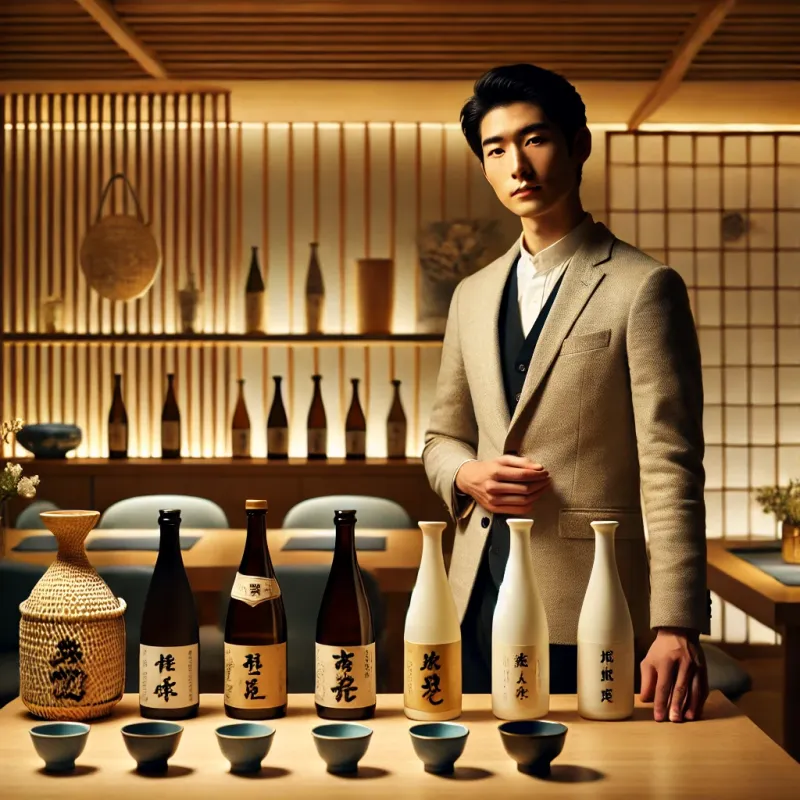
Photo: sake sommelier pouring sake at Japanese restaurant table formal service, via institutoyamamoto.com.br
There is a particular kind of silence that settles over a table when a sake sommelier finishes a recommendation. The guest nods, smiles, and orders whatever was suggested — not because the choice resonates, but because the terminology was dense enough to make disagreement feel embarrassing. The sommelier moves on, satisfied. The guest drinks something they may not have wanted. Nobody wins.
This is not a criticism of expertise itself. The growth of formal sake certification programs in the United States — through bodies such as the Sake Education Council and the Wine & Spirit Education Trust — has brought genuine rigor to an area that once suffered from casual misinformation. Trained sake professionals can distinguish a junmai daiginjo from a honjozo by aroma alone, explain the role of koji mold in fermentation, and match a brewery's house style to a guest's stated preferences with impressive accuracy. That knowledge has real value.
The problem is not what the expert knows. The problem is how that knowledge is sometimes delivered.
The Vocabulary Barrier
Walk into a high-end Japanese restaurant in New York, Los Angeles, or Chicago, and the sake list may arrive as a laminated booklet organized by prefecture, rice polishing ratio, and SMV (sake meter value). A well-meaning server might explain that a particular bottle is a "kimoto-style junmai with a rich, earthy profile and higher acidity, fermented using traditional lactic acid cultivation rather than modern sokujo methods." Every word in that sentence is accurate. Almost none of it helps a first-time sake drinker decide whether they will enjoy what's in the glass.
The paradox is structural. The more fluent a sake professional becomes in the technical language of brewing, the harder it can be for them to remember what it felt like to know nothing. Expertise creates its own grammar, and that grammar is not always legible to the uninitiated. When a guest asks simply, "What do you recommend with the salmon?", receiving a dissertation on regional water chemistry is not an answer — it is a deflection dressed as generosity.
What Intimidation Actually Looks Like
Intimidation in sake service rarely announces itself. It does not come from rudeness or condescension. It arrives more quietly: in the assumption that the guest wants education rather than enjoyment, in the length of an explanation that was never requested, in the slight pause before a server responds to a preference that doesn't align with what they consider the "correct" choice.
Consider a common scenario. A diner at a Pacific Northwest omakase counter tells the sake server that she enjoys something dry and light, perhaps similar to a crisp white wine. The server nods, then steers her toward a highly polished daiginjo — a reasonable instinct — but spends three minutes explaining the ginjo aroma compounds (ginjo-ka), the role of low-temperature fermentation, and the specific yeast strain responsible for the floral notes. By the time the sake arrives, the diner has forgotten what she originally wanted and is now second-guessing whether her palate is sophisticated enough to appreciate what she's been given.
The sake itself may be excellent. But the experience surrounding it has quietly communicated that her instincts were insufficient, that the path to enjoyment runs through technical fluency she does not yet possess. That message, however unintentional, is the barrier.
The Credentialing Culture and Its Costs
American dining culture has, in recent decades, developed a significant appetite for expertise signaling. Wine sommeliers, cheese mongers, coffee Q-graders, and craft spirits educators have all found eager audiences among consumers who associate professional certification with quality assurance. Sake has followed this trajectory, and there are legitimate benefits: standards rise, misinformation decreases, and the category earns a seat at tables where it was previously ignored.
But credentialing culture carries a cost when it begins to function as hierarchy rather than hospitality. When a sake list is curated exclusively for the guest who already knows what nigori means, when a server's enthusiasm for obscure small-production breweries overshadows a guest's expressed preference for something approachable, the credential has become a social barrier rather than a service tool.
This is not unique to sake. It echoes debates long familiar in the wine world, where the formalization of sommelier culture — detailed memorably in journalist Bianca Bosker's exploration of that profession — has sometimes produced service that prioritizes technical performance over genuine connection. Sake, as a younger category in the American market, has an opportunity to learn from that example before the same patterns calcify.
A More Useful Model: Conversation Over Lecture
The alternative is not the elimination of expertise. It is the reorientation of expertise toward listening rather than demonstration.
A sake professional who opens a conversation with "What flavors do you usually enjoy?" rather than "Let me tell you about this region's water profile" is deploying their knowledge in the direction of the guest rather than at them. The technical understanding remains fully present — it simply operates in service of the human being across the table rather than as a performance of professional identity.
Practically, this looks like shorter explanations, more questions, and a willingness to honor preferences that don't align with what the expert finds most interesting. It means describing sake in sensory language before reaching for technical vocabulary: "This one is clean and a little savory — it'll step back and let the fish lead" communicates more to most diners than a polishing ratio ever will.
What Drinkers Can Do
The responsibility does not rest entirely with the server. Drinkers who feel intimidated by sake service have more agency than they often exercise.
The most effective tool is specificity. Rather than asking "What's good?", try anchoring the request in something concrete: a flavor memory, a food preference, a mood. "I want something that doesn't compete with this broth" or "I'd like to start with something easy before we get adventurous" gives a skilled server genuine information to work with and signals clearly that the guest is a participant in the conversation, not a passive recipient of expertise.
It is also entirely reasonable to push back on an explanation that has gone too long. "That's helpful — can you give me the short version?" is not an insult. It is a reasonable request that any professional worth their certification should be able to honor without taking offense.
And if a sake arrives and it simply isn't what you wanted, say so. A good sake program welcomes that feedback. It is information, not failure.
Expertise in Its Proper Place
The goal of sake education — the animating purpose behind this site and behind every thoughtful sake professional working in American restaurants today — is not to produce a population of certified experts. It is to produce drinkers who feel genuinely at home with sake: curious, confident, and capable of following their own palates wherever those palates lead.
Expertise serves that goal best when it remains invisible to the guest — when all they notice is that the sake in their glass is exactly right, and that the person who suggested it seemed to understand what they needed before they fully understood it themselves.
That is the craft of service. It is harder than knowing the polishing ratio, and considerably more valuable.