When Humble Rice Outperforms the Premium Grade: Rethinking What Goes Into a Great Sake
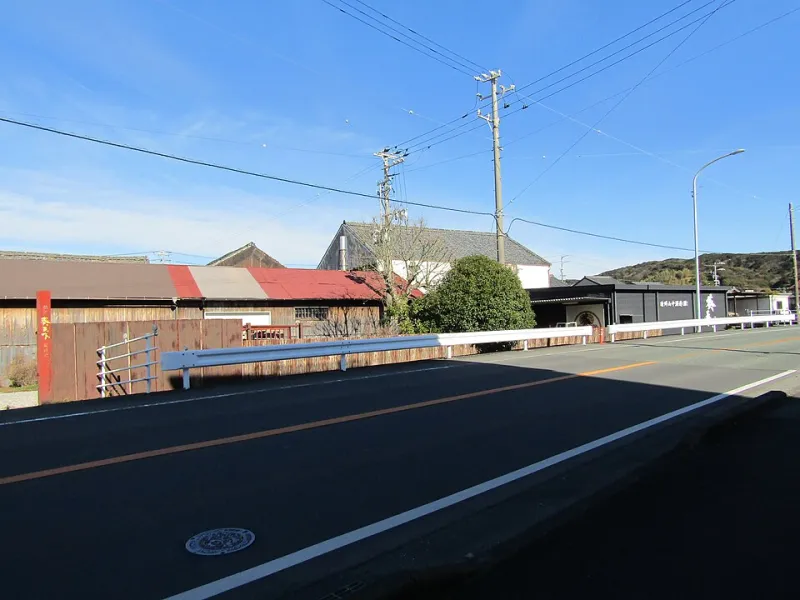
Photo: Halowand, CC BY 4.0, via Wikimedia Commons
There is a version of sake education that runs something like this: better rice, better water, rarer koji, finer sake. It is a clean narrative, easy to communicate, and almost entirely misleading.
For drinkers trained on wine or craft spirits, the ingredient-quality equation feels intuitive. Single-origin cacao, heritage grain whiskey, estate-grown grapes—in those worlds, provenance and material pedigree reliably signal what is in the bottle. Sake, however, operates under a different logic. And appreciating that difference is not a minor refinement in understanding. It is a fundamental reorientation.
The Mythology of Yamada Nishiki
Ask most sake professionals to name the finest sake rice, and the answer will arrive without hesitation: Yamada Nishiki. Cultivated primarily in Hyogo Prefecture, it is often called the "king of sake rice," celebrated for its large grain size, high starch content, and the elegant, clean profiles it tends to produce. Premium Yamada Nishiki is expensive. It is difficult to grow. And it commands serious respect within the brewing community.
All of that is true. What is equally true is that some of Japan's most discussed and sought-after sakes are made from rice varieties that don't appear on anyone's prestige list.
Breweries in Akita Prefecture have long worked with Akita Sake Komachi, a locally developed variety that lacks the glamour of Yamada Nishiki but produces sakes of remarkable depth and regional character. In Niigata, brewers working with Gohyakumangoku—a variety sometimes dismissed as producing overly neutral profiles—have used that perceived neutrality as a canvas, coaxing out subtle mineral notes and structural precision that a more expressive rice might overwhelm. The ingredient is not the destination. It is a starting point.
Deliberate Plainness as Creative Strategy
The concept of wabi, an aesthetic sensibility that finds beauty in simplicity and imperfection, runs through Japanese craft culture in ways that Western luxury frameworks struggle to accommodate. In sake brewing, this sensibility has a practical expression: some brewers actively resist premium materials because those materials impose their own character onto the final product.
When a brewer works with a highly expressive, sought-after rice variety, they are in conversation with that ingredient. It has strong opinions. It wants to go certain places. A skilled brewer can guide it, but the rice participates in the creative decision-making in ways that are not always welcome.
Choosing a more neutral rice, by contrast, hands the brewer a quieter collaborator. The canvas is less assertive. The resulting sake may reflect the brewer's intentions with greater fidelity—the yeast selection, the water chemistry adjustments, the fermentation temperature curve, the milling decisions. Every variable becomes more audible precisely because the rice is not dominating the conversation.
This is not a compromise. It is a compositional choice.
Water: Where the Paradox Deepens
The water story in sake is similarly complicated. Nada, the famous brewing district near Kobe, built its reputation on miyamizu, an unusually mineral-rich water that produces vigorous fermentations and the firm, dry sakes associated with the region. Fushimi, near Kyoto, draws on soft water that yields the softer, more delicate profiles for which that district is known. Both are celebrated. Both are considered premium sources.
Yet across Japan, brewers working with water sources that would never appear in a marketing brochure have used those sources as creative constraints rather than limitations. Hard water that is too aggressive for certain styles becomes the foundation for bold, structured sakes designed around that aggression. Slightly iron-tinged water—technically a problem for brewing—has prompted brewers to develop filtration and treatment approaches that produce distinctive results unavailable to those working with "perfect" sources.
The American craft brewing world offers a useful parallel. Some of the most celebrated craft breweries in the country are not located near pristine mountain springs. They treat municipal water, adjust mineral content deliberately, and use that control to produce beers of extraordinary precision. The absence of a legendary natural source is not a deficit. It is an invitation to engineer.
Koji and the Limits of Rarity
Koji—the mold Aspergillus oryzae cultivated on rice to produce the enzymes that convert starches to fermentable sugars—is perhaps the most misunderstood variable in the ingredient conversation. Certain koji strains have developed reputations for producing particular flavor compounds, and the temptation to treat rare or heritage strains as inherently superior is understandable.
But koji cultivation is as much about technique as it is about strain. The temperature and humidity of the koji room, the timing of each intervention, the skill of the toji in reading the mold's progress—these variables shape the koji's contribution as profoundly as the strain itself. A common koji strain handled with exceptional skill will consistently outperform a rare strain handled carelessly. The human element does not merely support the ingredient. In many cases, it surpasses it.
Breweries that have built reputations on accessible koji strains managed with unusual precision are not making do with second-tier materials. They are demonstrating that mastery of process generates quality that no ingredient can provide on its own.
What This Means for How You Drink
For American sake drinkers, this reorientation has practical consequences. When evaluating a sake, the temptation to treat Yamada Nishiki as a quality signal—or to dismiss a sake made from table rice as inherently lesser—misreads how the best brewers actually think about their work.
The questions worth asking are different ones. What was the brewer trying to achieve? How do the ingredient choices serve that vision? Does the sake express a coherent point of view, regardless of whether the materials are prestigious?
A sake made from ordinary rice, local water, and a workaday koji strain, in the hands of a brewer with genuine vision, can be among the most interesting things in your glass. A sake assembled from every premium ingredient available, without a clear sense of purpose, may be technically accomplished and experientially forgettable.
The ingredient list is not the artwork. It is the medium. And in sake, as in most serious craft, the distinction matters enormously.