What the Server Isn't Telling You: Navigating Sake Lists on Your Own Terms
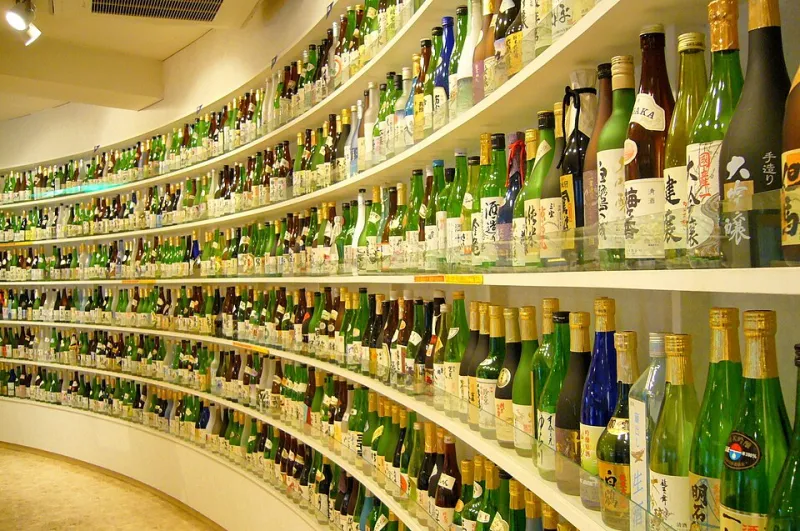
Photo: Yusuke Kawasaki, CC BY 2.0, via Wikimedia Commons
There is a particular kind of confidence that settles over a dining room when someone behind the bar describes a sake as "smooth, approachable, and great for beginners." It sounds authoritative. It sounds helpful. And in many American restaurants, it is also, quietly, a sales pitch.
This is not an indictment of servers or sommeliers as individuals. Most people working the floor at a sake-forward restaurant are doing their best with limited training and a list assembled by someone else. But the structure of how sake is sold in the United States — the distributor relationships, the promotional incentives, the margins built into certain bottles — means that the sake most likely to be recommended to you is often the sake that is easiest for the establishment to move, not necessarily the one most deserving of your attention.
Understanding that gap is the first step toward drinking better.
The Mechanics of a Sake List
When a restaurant builds its sake program, the list rarely begins with a buyer sitting down with fifty bottles and selecting purely on merit. More commonly, it begins with a conversation between a manager or beverage director and a local distributor. Distributors carry portfolios, and those portfolios have priorities. Certain labels come with marketing support, promotional pricing, or volume incentives that make them attractive to stock. Others arrive with training materials and staff tastings designed to build enthusiasm for specific products.
None of this is unusual or inherently corrupt — it mirrors how wine and spirits programs are assembled across the country. But it does mean that the sake appearing most prominently on a list, or the one a server reaches for first when asked for a recommendation, may owe its position partly to commercial relationships rather than purely to what is in the bottle.
For a category as nuanced as sake — where distinctions between junmai, ginjo, and daiginjo styles represent genuine differences in brewing philosophy and ingredient quality — this compression of the selection process can quietly flatten the experience for the drinker.
Why 'Approachable' Is Often a Shorthand for Something Else
The word "approachable" appears with striking frequency in sake recommendations at American bars. It is worth pausing on what the term actually communicates.
In practice, "approachable" often describes sake that has been filtered to neutrality, chilled to a temperature that suppresses complexity, and priced at a point that allows for comfortable markup. These are not necessarily bad bottles. But the framing obscures something important: sake that requires a moment of genuine attention — a slightly warmer serving temperature, a pause between sips, a consideration of what you are eating alongside it — is rarely described as approachable, even when it offers far more to the curious drinker.
The brewery behind a quietly exceptional junmai from Niigata Prefecture may lack a US distributor with the infrastructure to place it widely. The result is that its sake never reaches most American lists, while a more aggressively marketed product occupies the recommended slot instead. The drinker, guided by a confident suggestion, never knows what they missed.
The Questions Worth Asking
Rather than accepting a recommendation at face value, a few targeted questions can reveal quite a lot about both the sake and the establishment's relationship to it.
Ask about the brewery, not just the style. A server who can tell you something meaningful about where a sake was made — the region, the water source, the brewing philosophy — is drawing on genuine knowledge. A server who can only describe the liquid in the glass ("it's clean, a little fruity") may be working from a distributor's tasting note rather than actual familiarity with the product.
Ask what the brewery is known for. Established Japanese breweries often have distinct identities: some prize mineral precision, others pursue aromatic expression, still others have built reputations around traditional unpasteurized styles. If the person making the recommendation cannot speak to that identity, it is a reasonable signal that the bottle was selected for reasons other than its particular merit.
Ask whether there is anything on the list that is harder to find elsewhere. A sake program assembled with genuine care will usually include at least one or two bottles that reflect a buyer's specific interests rather than a distributor's catalog. If every sake on the list is widely available at the nearest Japanese grocery store, the list may not have been built with much editorial intention.
Ask about serving temperature. Sake is one of the few fermented beverages in the world that can be served across a meaningful temperature range — from cold through gently warmed — with each point on that spectrum revealing something different in the liquid. A server who understands this and can make a temperature suggestion based on the style being poured is engaging with the craft at a level worth trusting.
Developing Your Own Frame of Reference
The most durable protection against a poorly guided recommendation is a palate that has done some work on its own. This does not require formal study or certification. It requires curiosity and repetition.
Seek out retail shops with dedicated sake sections, particularly those staffed by people who import directly or maintain relationships with specific breweries. In cities with established Japanese-American communities — Los Angeles, New York, Seattle, Chicago — specialty importers sometimes host tasting events that expose attendees to a broader range of styles than any single restaurant list can offer. These settings tend to be lower-pressure environments in which the sake itself, rather than the transaction around it, occupies the center of attention.
Take notes, even informal ones. The difference between a ginjo that strikes you as fleeting and bright and a junmai that lingers with something more substantial and earthy is a distinction worth recording. Over time, those notes become a vocabulary — one that belongs to you rather than to a marketing department.
When you return to a restaurant or bar, bring that vocabulary with you. Describe what you have enjoyed before, what you found too sharp or too neutral, what food context you are working within. A server or sommelier who responds to that specificity with genuine engagement rather than a pivot back to the house recommendation is worth listening to.
What the Craft Deserves
Japanese sake represents centuries of accumulated brewing knowledge — a tradition in which the relationship between water, rice, koji mold, and fermentation has been refined across generations of toji, the master brewers who dedicate their working lives to understanding a single, complex process. That tradition deserves more than a perfunctory recommendation driven by margin considerations.
This is not an argument for suspicion toward every server who suggests a bottle. It is an argument for engagement — for bringing enough knowledge and enough curiosity to the table that the conversation about what to drink becomes a genuine one rather than a transaction dressed in the language of expertise.
The sake in your glass has a story worth knowing. The question is whether the person who handed it to you knows it too.