Hot, Warm, or Chilled: How Serving Temperature Transforms What's in Your Glass
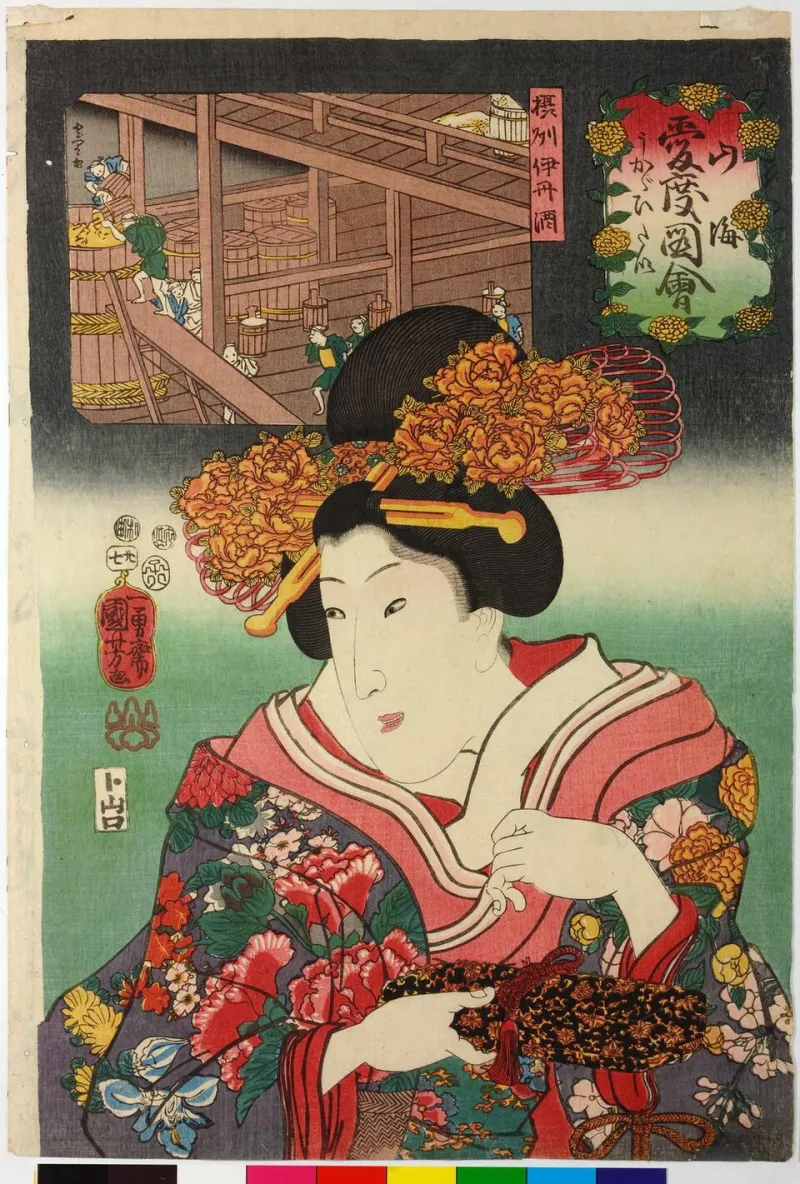
Photo: Print artist: Utagawa Kuniyoshi (歌川国芳), Public domain, via Wikimedia Commons
Walk into almost any bar in the United States that carries sake, and you will find it served in one of two ways: ice-cold in a stemmed glass, or poured from a refrigerated carafe. The assumption is almost universal — sake is a cold drink, and cold is correct. It is a reasonable assumption on its surface. Cold sake is clean, refreshing, and approachable. But it is also, in many cases, incomplete.
Temperature is not merely a matter of preference in sake culture. It is a dimension of the drink itself. The Japanese sake tradition recognizes more than a dozen named serving temperatures, each associated with distinct sensory outcomes. To default to cold every time is a bit like listening to an orchestra with the bass turned all the way down — the melody is still there, but the full depth of the composition is missing.
Understanding why this matters requires a closer look at how sake is built and what heat actually does to it.
Why Cold Became the Default in America
The story of sake in the United States is, in large part, a story of mass-market products arriving before education did. For decades, the sake most Americans encountered was inexpensive futsushu — basic table sake, often served hot at Japanese-American restaurants to mask rough edges, or cold at bars to make it feel more like a cocktail. Neither presentation was particularly illuminating.
As premium sake imports began arriving in greater volume through the 1990s and 2000s, importers and retailers leaned into refrigeration as a signal of quality. Cold meant fresh. Cold meant delicate. Cold meant premium. That messaging was not wrong for certain sake styles, but it calcified into a blanket rule that overlooked the full range of what sake can express.
The result is a generation of American sake drinkers who have been trained to associate warmth with low quality — a direct inversion of how many Japanese drinkers and brewers think about their finest aged and full-bodied expressions.
What Heat Actually Does to Sake
When sake is warmed, several things happen simultaneously. Volatile aromatic compounds become more active, meaning the nose opens up in ways that refrigeration suppresses. Amino acids — the building blocks of umami — become more perceptible on the palate. The body of the sake feels rounder and more enveloping. Sweetness can soften, and certain acidic or astringent notes may smooth out.
For sakes that are designed with this in mind — typically those with lower aromatic intensity, richer rice character, and higher umami — warming is not a workaround. It is the intended experience.
Conversely, highly aromatic sakes — particularly ginjo and daiginjo styles, which undergo cold fermentation specifically to produce delicate floral and fruity esters — can lose their most distinctive qualities when warmed. The very compounds that define their character are heat-sensitive. Serving them cold preserves what the brewer worked hardest to create.
The lesson is not that warm is better than cold. It is that the appropriate temperature depends entirely on the sake in your glass.
A Practical Temperature Guide by Style
Junmai and Junmai Kimoto — Warm to Hot (40°C–55°C / 104°F–131°F)
Full-bodied junmai sakes, particularly those brewed using traditional kimoto or yamahai methods, are among the most rewarding sakes to serve warm. These styles carry pronounced umami, earthy grain notes, and a natural acidity that integrates beautifully with heat. At around 45°C (113°F) — a temperature the Japanese call jokan — they become genuinely warming in the most satisfying sense: rich, savory, and deeply expressive. Paired with roasted meats, aged cheeses, or miso-based dishes, a warmed junmai kimoto is a revelation for anyone who has only experienced it cold.
Honjozo — Slightly Warm (35°C–40°C / 95°F–104°F)
Honjozo, which incorporates a small addition of distilled alcohol during brewing, tends to be lighter and cleaner than pure-rice junmai styles. It responds well to gentle warming — enough to soften the texture and draw out subtle grain sweetness without overwhelming the palate. This is an excellent entry point for American drinkers curious about warm sake, as the style is forgiving and widely available.
Ginjo and Daiginjo — Well-Chilled (8°C–12°C / 46°F–54°F)
These are the sakes most responsible for the cold-serving convention, and in this case, the convention is well-founded. Ginjo and daiginjo sakes are fermented at low temperatures over extended periods specifically to develop delicate aromatic compounds — think fresh melon, white peach, jasmine, and green apple. Serving them between 8°C and 12°C preserves these volatile aromatics while maintaining the crisp, elegant mouthfeel that defines the style. Going colder than 8°C, however, begins to suppress even these qualities. Ice-cold is not the same as well-chilled.
Nigori (Unfiltered Sake) — Lightly Chilled (10°C–15°C / 50°F–59°F)
Nigori's cloudy texture and residual sweetness make it one of the most approachable styles for new sake drinkers. Serving it slightly above refrigerator temperature — around 12°C — allows the creamy rice character to express itself more fully without the sweetness becoming cloying. It is a common mistake to serve nigori straight from the refrigerator, where the cold mutes the very richness that makes it appealing.
Aged Sake (Koshu) — Room Temperature or Slightly Warm (20°C–45°C / 68°F–113°F)
Koshu, or aged sake, occupies a category unto itself. With deep amber color, complex oxidative notes, and a profile that can evoke sherry, caramel, dried fruit, and soy, aged sake is perhaps the most misunderstood style in American sake culture. Serving it at room temperature or gently warmed allows its layered complexity to unfold gradually. Cold service flattens it entirely.
How to Warm Sake at Home
The most reliable method for warming sake at home is the tokkuri water bath: fill a small ceramic or glass carafe (tokkuri) with sake, place it in a saucepan of hot water, and monitor the temperature with a kitchen thermometer. Avoid microwaving sake directly, as it heats unevenly and can compromise delicate flavor compounds. A gentle, gradual warm-up respects both the sake and the effort that went into brewing it.
Rethinking the Default
The refrigerator is a fine starting point, but it should not be the end of the conversation. The most rewarding aspect of serious sake appreciation is discovering that the same bottle can taste fundamentally different depending on how it is served. A junmai that seems unremarkable cold can become complex and satisfying at 45°C. A daiginjo that dazzles at 10°C may seem flat and one-dimensional at room temperature.
Temperature is not a technicality. It is one of the most accessible ways to engage with sake as a living, expressive beverage — one that rewards curiosity and resists easy categorization. The next time you open a bottle, consider what the sake itself might be asking for, rather than what the refrigerator has already decided.