Freshness Is the Point: What Sake's Short Window Tells Us About How to Drink It
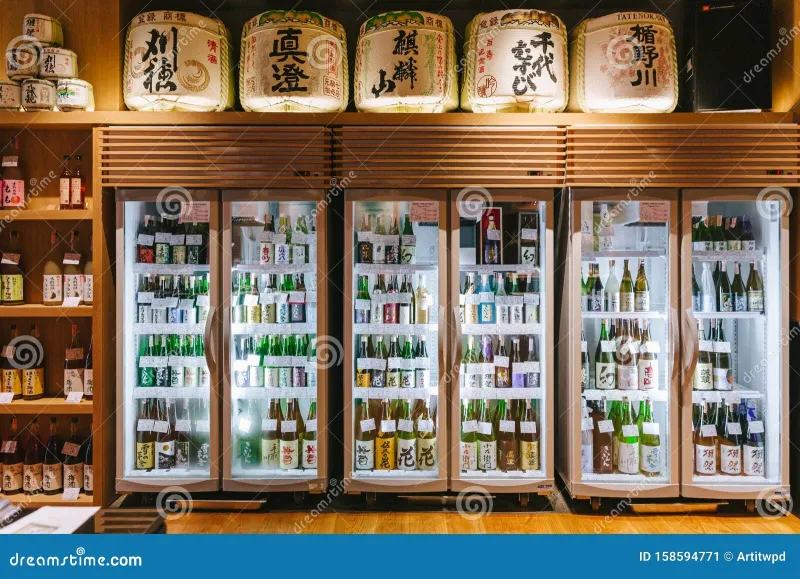
Photo: sake bottles refrigerator storage Japanese rice wine freshness, via thumbs.dreamstime.com
There is a particular kind of anticipation that comes from setting a special bottle aside. Wine culture has trained many of us to believe that waiting is a form of respect—that restraint in the present tense is rewarded with something more profound later. It is a romantic idea, and for certain wines, it holds genuine merit.
For sake, however, that instinct can quietly work against you.
Most sake is not built for the cellar. It is built for the table, and the sooner it reaches one, the better. This is not a limitation of the craft—it is, in many ways, an expression of its philosophy. Understanding why sake behaves so differently from wine requires a brief look at what sake actually is and what happens to it once it leaves the brewery.
Why Sake Ages Differently Than Wine
Wine's aging potential is largely tied to tannins, acidity, and certain phenolic compounds that evolve slowly under the right conditions, softening and integrating over years or even decades. Sake contains none of these structural components in meaningful quantities. It is a rice-based fermented beverage with a fundamentally different chemical architecture.
What sake does contain—in abundance—are amino acids, delicate esters, and volatile aromatic compounds that define its character at peak freshness. These elements are not stabilizers. They are expressive, lively, and fragile. Exposure to heat, light, and oxygen causes them to degrade in ways that are often irreversible.
The result is a beverage that, in most cases, is at its finest within twelve to eighteen months of bottling—and for certain styles, considerably sooner than that.
The Three Enemies of a Good Bottle
Light is perhaps the most underestimated threat. Ultraviolet radiation accelerates oxidation and triggers chemical reactions that flatten a sake's aroma and introduce off-flavors. This is precisely why many premium sake bottles are made from dark or opaque glass, and why sake stored under fluorescent retail lighting—common in American grocery and liquor stores—can deteriorate faster than the label date might suggest. If you have ever purchased a sake that looked beautiful on the shelf but tasted strangely muted, light exposure may well have been the culprit.
Temperature is equally significant. Sake stored at room temperature, particularly in warmer climates or during summer months, ages at an accelerated pace. The proteins and sugars present in sake react more rapidly under heat, leading to a yellowing of the liquid and the development of what brewers sometimes call hineka—a stale, flat character that lacks the brightness of a freshly opened bottle. Refrigeration is not optional for opened sake; it is essential.
Oxygen completes the triad. Once a bottle is opened, oxidation begins immediately. Unlike some natural wines that can tolerate or even benefit from air exposure, most sake—especially delicate ginjo and daiginjo styles—begins to lose its most expressive qualities within days. A half-finished bottle left on a countertop for a week is unlikely to deliver the same experience it offered on the first pour.
Reading the Bottle: What the Date Actually Tells You
Japanese sake bottles typically carry a bottling date rather than a vintage year in the Western sense. This distinction matters. The date you see on the label reflects when the sake was sealed, not necessarily when it was brewed. Sake often rests in the brewery for months before bottling, meaning the clock starts later than you might assume.
As a general guideline for US consumers:
- Nama sake (unpasteurized sake) should be consumed within a few months of purchase and must be kept refrigerated at all times, including during transport. It is the most time-sensitive style available.
- Ginjo and daiginjo styles, prized for their floral and fruity aromatics, are best enjoyed within one year of bottling. Their defining characteristics are the first to fade.
- Junmai and honjozo styles tend to be more robust and can maintain quality for up to two years under proper storage conditions.
- Aged sake (koshu) is a deliberate exception—these bottles are specifically crafted and conditioned for extended aging, and they represent a distinct category with their own flavor profile and intentional complexity.
If a bottle lacks a clear bottling date, that absence is itself useful information. Exercise some caution, particularly with discounted bottles whose provenance is unclear.
Practical Storage for the American Home
The refrigerator is your most reliable tool. Unopened sake stored upright in a standard household refrigerator will maintain its quality far longer than sake kept at room temperature. Unlike wine, sake does not benefit from being stored on its side—there is no cork to keep moist, and many premium bottles use alternative closures.
For those who purchase sake frequently and want a dedicated space, a small wine refrigerator set between 40°F and 50°F offers an excellent environment. Keep bottles away from the door, where temperature fluctuations are most pronounced, and out of direct light.
Once opened, reseal the bottle tightly and refrigerate it promptly. Plan to finish a standard 720ml bottle within two to three days for delicate styles, or within a week for fuller-bodied junmai varieties. Smaller 300ml bottles, increasingly available at specialty retailers across the US, are worth considering if you are exploring new styles and unlikely to finish a full bottle quickly.
Rethinking the 'Special Occasion' Bottle
There is something worth reconsidering in the habit of saving a fine sake for a future occasion. Unlike a wine that might genuinely improve with ten years of careful cellaring, a premium ginjo set aside for six months may well be a diminished version of what it could have been.
The most meaningful act of appreciation, in this case, is also the most immediate one: open the bottle, pour it fresh, and engage with it at its peak. Sake's relationship with time is not a flaw in its character—it is an invitation to be present with what is in the glass right now.
That, in many ways, reflects something essential about the culture from which sake comes. The Japanese concept of ichigo ichie—roughly, the idea that each moment is singular and unrepeatable—finds an unlikely but fitting expression in a well-chilled glass of nama sake, enjoyed precisely when it is meant to be.