No Diploma on the Wall: How Japan's Master Brewers Actually Learned Their Craft
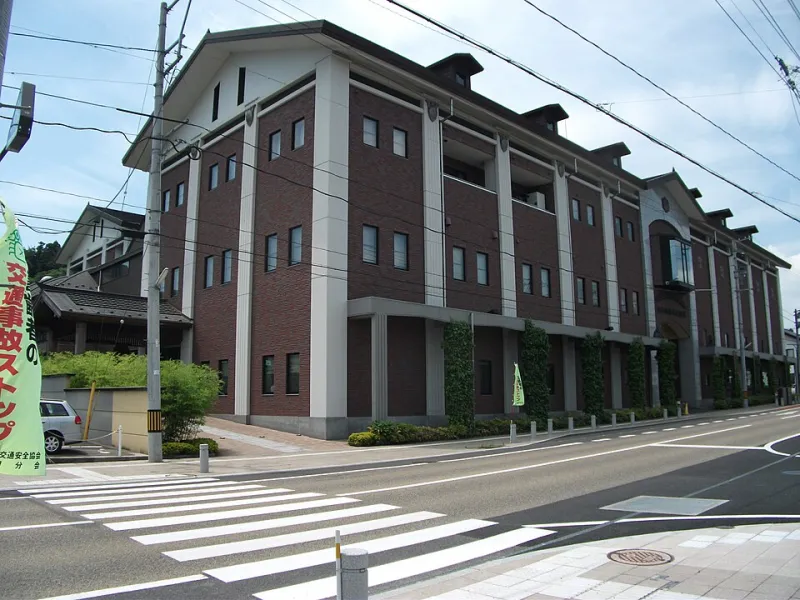
Photo: Halowand, CC BY 4.0, via Wikimedia Commons
When Americans encounter a sommelier, a certified cicerone, or a spirits educator, there is an implicit trust that follows the credential. The badge, the pin, the framed certificate — these signal that someone has passed a standardized test, absorbed a defined curriculum, and been judged competent by an accredited body. It is a system that makes intuitive sense in a culture built around measurable outcomes.
But walk into one of Japan's most storied sake breweries — a kura that has been operating for two hundred years — and ask the head brewer, the toji, where he studied. Chances are the answer will not involve a university, a professional association, or a multi-day examination. It will involve rice. Cold mornings. Decades of watching fermentation move through its stages like a living thing that cannot be fully predicted, only read.
This is not a romantic exaggeration. It is how sake expertise has been transmitted for centuries, and it raises a genuinely important question for anyone serious about understanding what is in their glass.
The Toji and the Weight of Accumulated Knowledge
The toji is the master brewer — the individual responsible for every decision that shapes a sake's character, from the selection of rice varieties to the precise timing of koji cultivation to the final blending of tanks. The role carries enormous responsibility, and historically it was filled by individuals who had spent fifteen, twenty, sometimes thirty years working their way through every position in the brewery before being trusted with that authority.
This apprenticeship model was not incidental to the tradition. It was the tradition. Knowledge passed from toji to apprentice not through written manuals but through proximity — through watching, smelling, touching, and being corrected. The ability to assess koji health by the texture of the grain against one's palm, or to detect a fermentation problem by the particular sharpness of a smell, is not something that can be adequately described in a textbook. It must be experienced hundreds of times before the body learns to recognize it reliably.
Many of Japan's most celebrated breweries are still guided by toji who entered the craft as young men through precisely this path. Their expertise is not theoretical. It is embodied — written into their instincts through years of repetition in environments where error had real consequences.
What Certification Can and Cannot Capture
This is not an argument against sake education. Programs offered by the Sake Education Council, the Japan Sake and Shochu Makers Association, and various independent institutions have done meaningful work in bringing structured knowledge to a global audience. For a consumer in the United States trying to make sense of a label or understand why one junmai daiginjo tastes entirely different from another, a certification course can provide genuine orientation.
But there is a distinction worth preserving between literacy and mastery. A certification can teach someone to read the language of sake — to understand the significance of polishing ratios, to identify broad flavor categories, to pair styles with food intelligently. What it cannot easily replicate is the kind of knowledge that lives below language: the intuitive grasp of a fermentation's momentum, the feel of properly steamed rice, the judgment that comes from having made thousands of small decisions and observed their consequences over time.
When credentialing culture conflates these two things — when the certificate comes to stand in for the craft — something important is obscured. The consumer begins to trust the badge more than the beverage. The educator's vocabulary substitutes for the brewer's silence. And sake, which is fundamentally a product of accumulated human judgment rather than algorithmic precision, gets flattened into something more manageable and considerably less interesting.
The Seasonal Rhythm That No Exam Can Replicate
Traditionally, sake brewing was seasonal work. The toji and their crews — often traveling from agricultural regions during the winter months — would arrive at the brewery in late autumn, work through the coldest part of the year, and return home when the season ended. This rhythm was not merely logistical. It shaped the knowledge itself.
Brewers learned to read winter — to understand how ambient temperature affected fermentation pace, how humidity influenced koji growth, how the particular cold of a given year might require adjustments that no formula could anticipate. They learned to work with conditions rather than against them, developing a sensitivity to environmental variables that is inseparable from the quality of what they produced.
Modern technology has reduced some of this dependence on seasonal conditions, but the underlying principle remains. The best brewers are not those who follow a protocol most precisely. They are those who know when to depart from it — and that knowledge comes only from experience.
What This Means for the American Sake Drinker
For those of us approaching sake from the outside, this history carries a practical implication. The most useful question to ask about a sake is not what score it received or what certification its importer holds. It is: who made this, and how long have they been making it?
A brewery with four generations of toji knowledge embedded in its walls is offering something that no amount of formal training can fully replicate. The consistency of a great kura — the way a house style persists across decades even as individual brewers rotate — reflects precisely this kind of transmitted, embodied craft.
This does not mean dismissing education or expertise signaling entirely. It means holding them at the appropriate distance. Credentials are useful maps. They can help orient a newcomer, provide common vocabulary, and establish a baseline of competence. But a map is not the territory, and sake — complex, seasonal, alive with microbial activity and human judgment — resists reduction to any map drawn in a testing center.
Learning to Listen Differently
There is something instructive in the toji's relationship to the sake they produce. They do not evaluate it primarily through a scoring rubric. They listen to it — to the sound of fermentation bubbling in the tank, to the way a particular batch speaks through its aroma at different stages, to the subtle signals that something needs attention before any instrument would register a problem.
This kind of listening is available to anyone willing to practice it. It does not require a certificate. It requires time, attention, and a willingness to let the sake teach rather than simply confirm what one already believes.
The American beverage culture is extraordinarily good at building systems for evaluating things. Points, tiers, certifications, rankings — these tools are not without value. But sake, at its deepest level, asks for something different. It asks for the patience to sit with complexity, to return to the same style across seasons and years, and to notice what changes and what endures.
That is not a curriculum anyone has figured out how to certify. It may be the most important part of the education.