Between Pours: The Case for Letting Sake Cleanse Itself
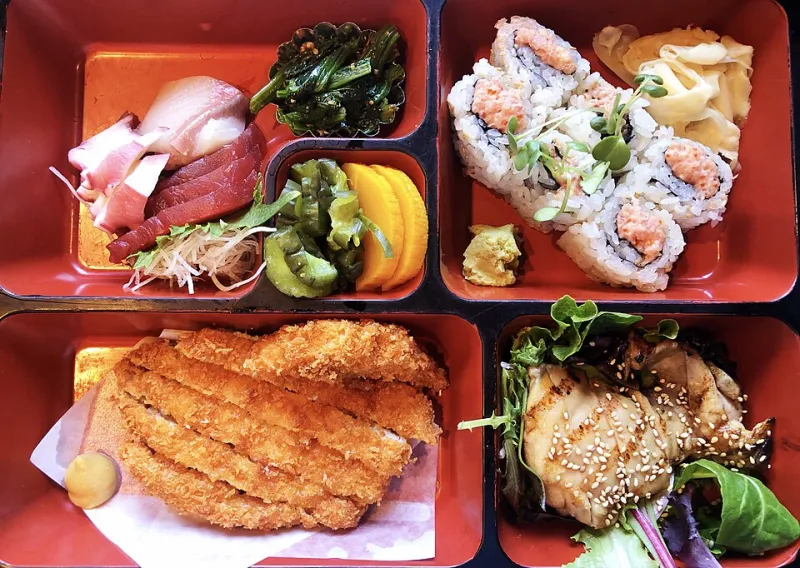
Photo: Missvain, CC BY 4.0, via Wikimedia Commons
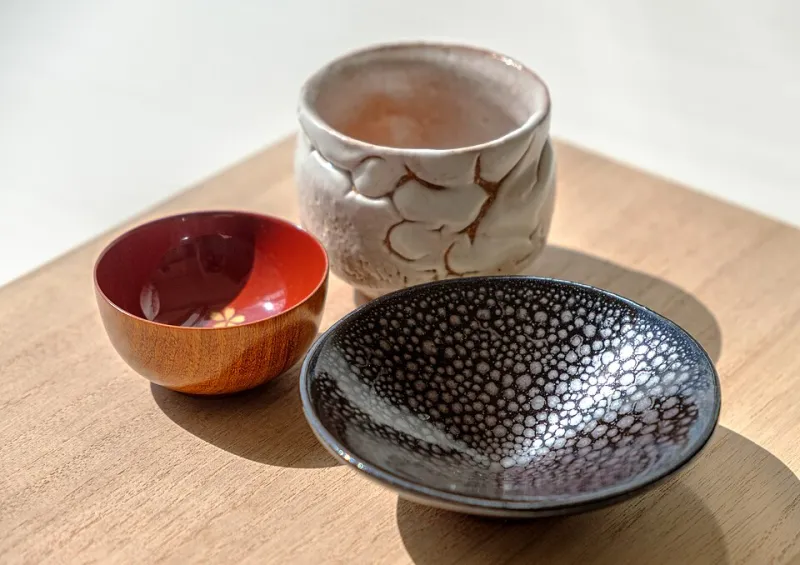
At a formal sake tasting in Kyoto, you will rarely see a row of water glasses standing beside the ochoko. The expectation is different from what most American wine drinkers are accustomed to. Rather than reaching for water between samples, seasoned sake drinkers often take a small, considered sip of a lighter or more neutral pour to clear the way for what comes next. It is a quiet ritual, one that raises a genuinely interesting question: does it actually work, and should you be doing it at home?
The Water Reflex and Where It Comes From
For most American tasters, the palate-cleansing water glass is practically a reflex. Sommelier training, wine club culture, and even casual tasting events at your local bottle shop all reinforce the same habit — sip, swirl, spit or swallow, then reach for the water. The logic is straightforward: water is neutral, it rinses the mouth, and it creates a clean baseline before the next wine arrives.
But that logic rests on an assumption that does not always hold. Water is not truly neutral in the context of tasting. It carries its own mineral profile, its own temperature, and — critically — it can interact with residual compounds on the palate in ways that distort rather than reset. Anyone who has ever taken a sip of water immediately after a high-tannin red wine and experienced a sudden metallic or bitter surge will recognize this phenomenon. The water did not cleanse so much as it revealed.
Sake, it turns out, operates in a chemical environment where these distortions are far less likely.
What Makes Sake Uniquely Suited to This Role
Unlike wine, sake contains virtually no tannins. Its acid levels are notably lower than most European wines, and its umami compounds — glutamates and succinates produced during fermentation — tend to coat the palate in a way that is integrative rather than competitive. When you taste a structured junmai after a richly aromatic daiginjo, the junmai does not clash with what came before. It absorbs it.
This is partly a function of sake's amino acid content. The fermentation process that converts rice starch into alcohol also generates a range of amino acids, some of which behave as natural flavor bridges. They do not erase what the previous pour left behind so much as they smooth the transition, creating a sensory continuity that water — with its blunt neutrality — cannot always provide.
There is also the matter of alcohol. At roughly 15 to 16 percent ABV, sake carries enough ethanol to act as a mild solvent, gently dispersing fat-soluble aromatic compounds that might otherwise linger on the tongue and interfere with subsequent pours. This is particularly relevant when tasting alongside food, where oils and proteins from dishes like grilled fish or aged cheese can otherwise dominate the palate well past their welcome.
The Japanese Cultural Logic
The practice of using sake as its own reset is not simply a sensory strategy — it reflects a broader Japanese aesthetic principle sometimes described as ma, the productive use of negative space or pause. In the context of tasting, the between-pour sip is not an interruption of the experience; it is part of the experience. It acknowledges that the transition between flavors deserves as much attention as the flavors themselves.
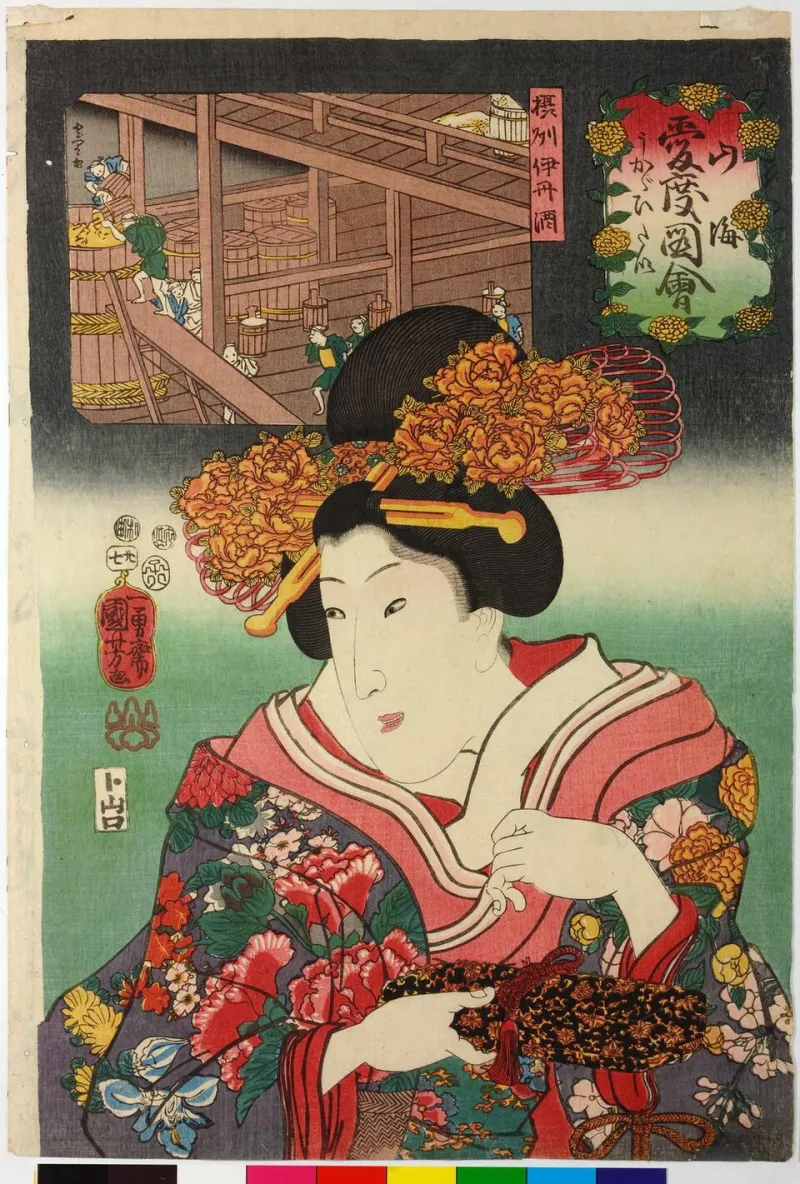
This sensibility extends into the traditional structure of sake service at kaiseki restaurants, where pours are often sequenced deliberately — lighter and more delicate expressions first, moving toward richer, more complex styles. The in-between sip, when it occurs, is typically drawn from the same lighter end of that spectrum. A clean, dry futsu-shu or a straightforward honjozo serves the purpose well, offering just enough character to signal a new chapter without asserting itself strongly enough to compete.
Practical Guidance for the Home Tasting Table
If you want to experiment with this approach at your next sake tasting — whether you are hosting friends or simply exploring a few bottles on your own — a few structural considerations will help.
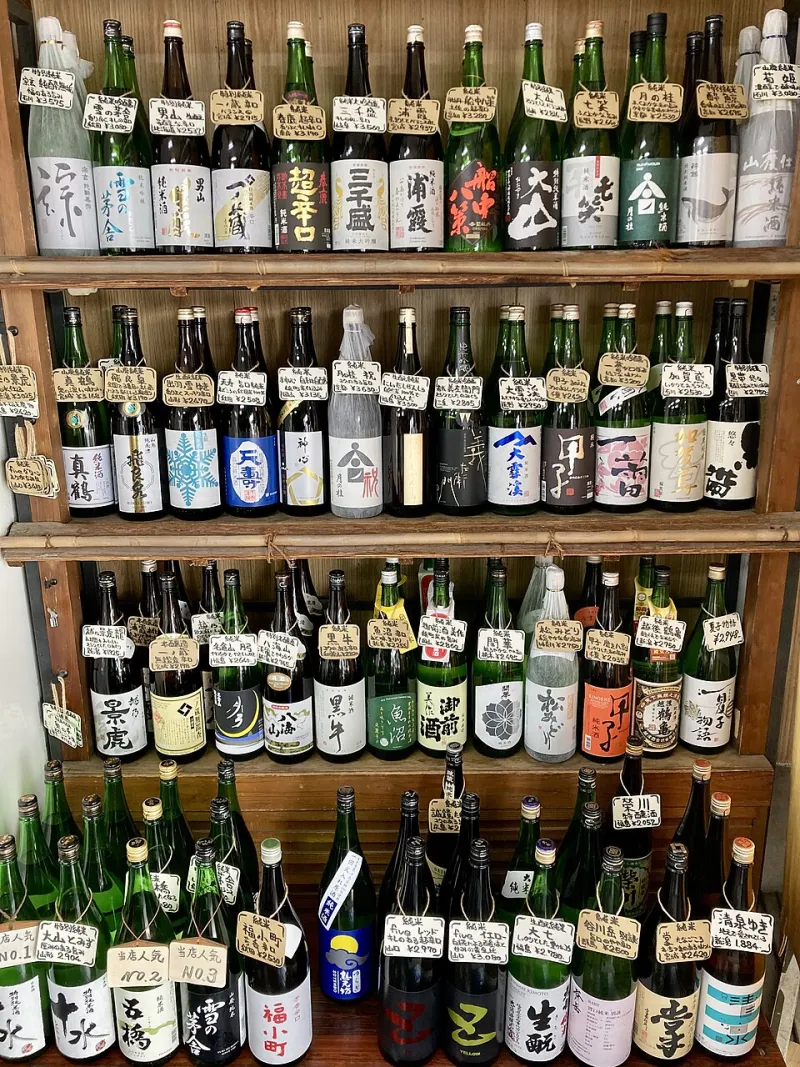
Sequence matters more than you might expect. Begin with your most delicate pours: a ginjo or daiginjo with high polish and restrained aromatics. Move toward junmai styles with more body and grain character, and finish with any aged or koshu expressions if you have them. This progression means that each subsequent pour is capable of contextualizing the one before it, rather than overwhelming it.
Keep a designated 'bridge' bottle on hand. A mid-range honjozo — dry, clean, and relatively neutral — works well as a palate reset between dramatically different styles. You are not looking for something complex; you are looking for something honest and quiet.
Do not abandon water entirely. There are moments when water genuinely serves a purpose: after a particularly savory food pairing, for instance, or when you need a longer break between tasting sessions. The goal is not to replace water categorically but to recognize that it is not always the best tool for the job.
Pay attention to temperature. A slightly chilled reset pour — around 50 to 55 degrees Fahrenheit — tends to be more effective than one served at room temperature. The mild chill helps contract the palate slightly, creating a cleaner baseline before the next sample.
Does the Science Support the Tradition?
The honest answer is: largely, yes. While formal sensory science research specifically on sake-as-palate-cleanser is limited, the underlying chemistry is consistent with the practice. The low tannin content, moderate acidity, and amino acid profile of sake create a beverage that interacts with the palate in a gentler, more integrative way than many of its fermented counterparts. It does not introduce new competing signals so much as it quiets the ones already present.
There is also something to be said for the psychological dimension of tasting. When you reach for water, you are signaling a full stop — a complete reset. When you reach for a lighter sake, you are signaling a transition. That distinction in intention can shape how attentively you move from one pour to the next, which ultimately affects what you notice and how clearly you are able to articulate it.
A Tradition Worth Borrowing
For American sake drinkers who have spent years conditioning themselves to the water-glass habit, this shift in approach requires a small but meaningful act of trust. Trust in the beverage, trust in the sequence, and trust in a tradition developed over centuries by people who understood that the space between flavors is itself a kind of flavor.
The next time you open two or three bottles for an evening of exploration, set the water aside — at least temporarily. Pour something clean and unassuming alongside your more complex selections, and let sake do what it has always been quietly capable of doing: making room for what comes next.